FROM THE ARCHIVES
Yellow Jacket: ‘A most wonderful horse’
By Franklin Reynolds in the May 1959 Quarter Horse Journal
Editor’s Note: It’s fascinating to read about the early detectives of our breed, who meticulously researched pedigrees and sought out the earliest breeders who could relay first-hand information. Here, an envelope tucked away in a shoebox offered up details about Yellow Jacket’s bloodlines. As a note of explanation, “tail male” refers to the top line of a pedigree – so a horse’s sire, grandsire, great-grandsire and so on.
One of the most worthwhile, though somewhat sparse, elements in the Quarter Horse world, is the blood, in tail male, of the remarkable Yellow Jacket.
We have seen the sire line of the notable Pid Hart disappear, and for this, there is ample explanation. His sons were in such great demand as geldings for polo mounts in the North and East, and at such premium prices, that no Texas or Oklahoma breeder exercised the foresight to preserve his line in tail male.
AQHA file photo
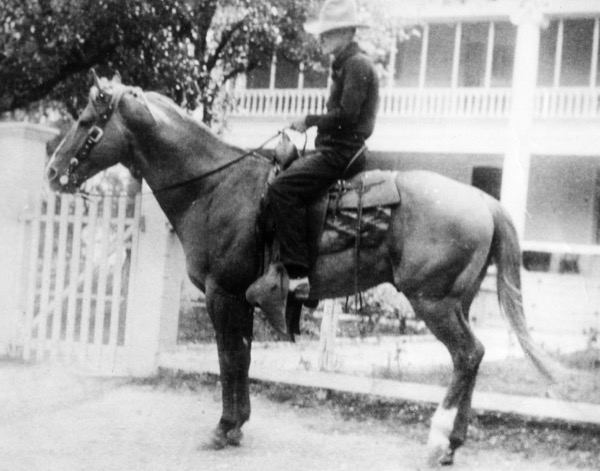
Thought to have been born around 1907, Yellow Jacket spent time on racetracks and ranches. His true worth as a sire wasn’t realized until much later.
The same thing might have happened to the Yellow Jacket line but for the fact that a gentleman, who did not own Yellow Jacket, borrowed him one season and bred him to a trio of particularly good mares. But for this, the bloodline of Yellow Jacket might have come down to the present only through his daughters.
Almost entirely, if not wholly so, the Yellow Jacket male line has survived through his sons – Beetch’s Yellow Jacket, East’s Yellow Jacket, Yellow Ding Bob, Blackburn, Yellow Boy and Cowboy, the latter sometimes known as Cowpuncher. Which of these sons proved to be the most important to the strain is a matter that is quite controversial.
If the writer, as a historian of the Quarter Horse, may be permitted to express an opinion, he would select Beetch’s Yellow Jacket for this distinction. Likewise, he believes Hard Twist is, beyond argument, the outstanding exponent of this bloodline, in tail male, in service today (in 1959).
It must be remembered that Yellow Jacket died more than a decade before the founding of the Quarter Horse registry. Detailed pedigree records on many of his daughters were not preserved.
There can be no doubt that Yellow Jacket was allowed to cover a few mares during his racing career. Such matings are most difficult to discover and confirm. His first known, verifiable service as a sire came about when he was purchased off the race course by the W. T. Waggoner Ranch, south of Vernon, Texas.
AQHA file photo
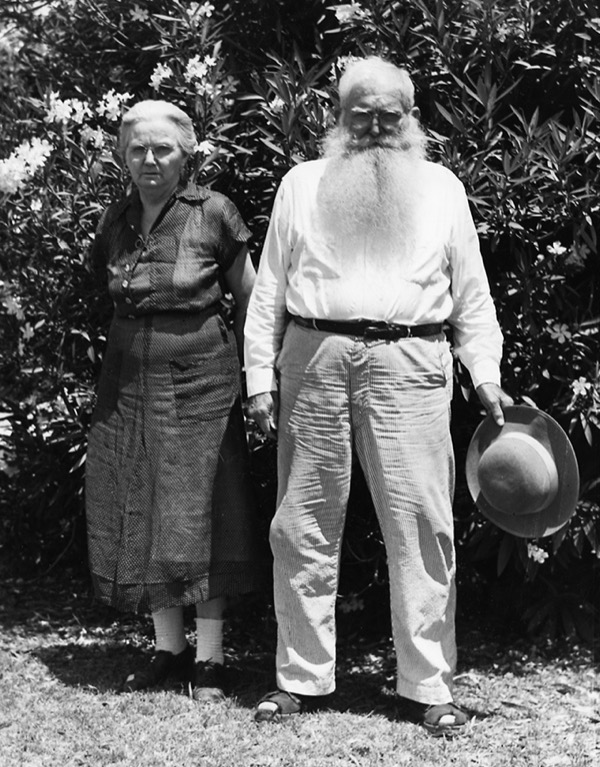
Leon and Lizzie May Miller of Kyle, Texas, stored pedigree records in a shoebox, proving beyond any doubt who Yellow Jacket’s sire and dam were.
Lige Reed, manager of the Burnett Triangle Ranch near Iowa Park, Texas, at the time of this writing, was then and had been for many years, in charge of the horses for Mr. Waggoner.
Mr. Reed says he believes it was 1916 or 1917 that Yellow Jacket was received at the ranch. He was then “a horse of some years.” Yellow Jacket was a dun with a red mane and tail who stood about 15 hands and 2 inches. He showed some evidence of Thoroughbred blood, was well formed and had a good disposition. It was during Yellow Jacket’s service on the Waggoner Ranch that he became the sire of Beetch’s Yellow Jacket, he the sire of sisters Lady Coolidge and Dixie Beach (which should have been “Beetch”), bred by the late Mike Beetch of Lawton, Oklahoma. Beetch’s Yellow Jacket later went to the Burnett Ranches in Texas, where he died. Lady Coolidge became the dam of the famous Bert. It was also on the Waggoner Ranch that Yellow Jacket became the sire of Yellow Ding Bob and East’s Yellow Jacket.

In 1924, when Yellow Jacket was near the end of his career, he was given by Mr. Waggoner to Lee Bivens of Amarillo. While the horse was owned by Mr. Bivens, an associate of his, Edgar Thompson, had the privilege in 1926 of breeding five mares to Yellow Jacket. The following year, these mares foaled four colts and one filly. Three of the colts, as can be established, were Blackburn, Yellow Boy and Cowboy or Cowpuncher (not to be confused with the gelded Cowpuncher, also a son of Yellow Jacket and Mr. Waggoner’s favorite saddle horse). From Cowboy, bred by Mr. Thompson, came such renowned get as Hard Twist and Shue Fly. All trace was lost of the fourth colt from the Thompson mares. After Mr. Thompson sold him, an extensive and diligent search proved futile. The filly became and has since remained an unknown.
Yellow Boy went to the JA Ranch at Palo Duro, Texas, where he was sometimes known by some of the cowpunchers as the JA Yellow Jacket. He may appear so in some of the older pedigrees. Later, Yellow Boy was owned by John Sims Jr. of Pampa, Texas, and still later, he was on the ranch of Ralph Jones of Claude, Texas, who used him as a cross on mares of Midnight breeding, a blending of bloodlines that can be calculated to result in most excellent horses. Like his sire, Yellow Boy was a dun with a red mane and tail.
Blackburn, the third of Yellow Jacket’s sons from the Thompson mares, was purchased by Mr. Waggoner and returned to the ranch from which Yellow Jacket had departed as a gift to Mr. Bivens. Blackburn became a very successful sire of ranch horses of quality, especially broodmares.
AQHA file photo
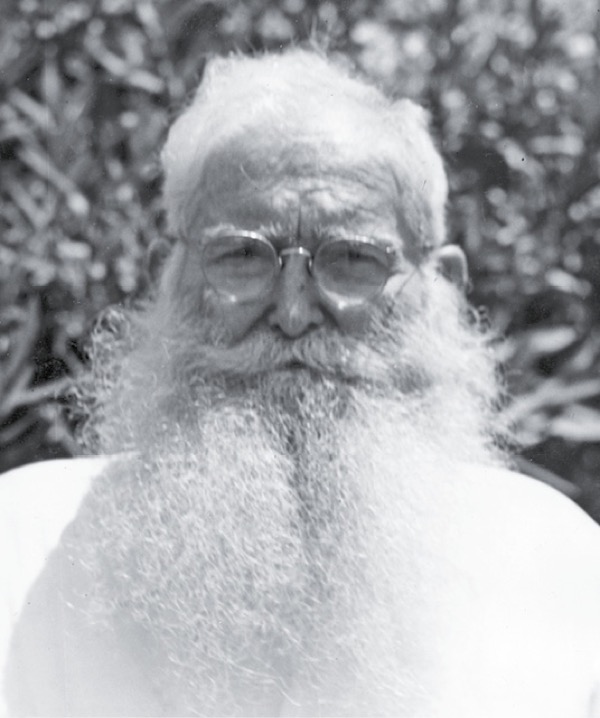
The Quarter Horse historian who wrote this piece in 1959 described Mr. Miller as a “cultured and gallant gentleman of the Old South; jolly and a brilliant and charming conversationalist.” He was also known as a good horseman and was himself a student of pedigrees.
Mr. Reed does not recall that a single one of Yellow Jacket’s colts sired at the Waggoner Ranch was kept as an entire horse for use on the ranch because, as geldings, they made such good cow horses. Most of his daughters, however, seem to have been retained in the broodmare bands.
Due to a lack of certain knowledge, and also because of the years between the season Yellow Jacket was first to put to stud and the year AQHA was organized, hundreds of mares were sold by the ranch without individual identification and frequently in large bands. Mike Beetch was among the more prominent buyers of some of these mares.

At the same time, what were probably some of the best mares ever bred by the Waggoners have been the daughters of Blackburn. These daughters were, of course, paternal granddaughters of Yellow Jacket. It is quite possible that among horsemen, particularly in the early part of Blackburn’s career as a sire, some may have been referred to as “Yellow Jacket mares” or “mares of Yellow Jacket breeding,” thus giving rise to a misconception.
There have also been some misunderstandings about the breeding of Yellow Jacket himself. Other stallions have been mentioned as his sire, but my research has precluded any possibility, however remote or minute, that he could have been sired by any horse other than the Bunton Rondo, listed in AQHA records as Little Rondo.
It is difficult in the absence of records – known to have been made but the whereabouts of which are now unknown – to fix the exact foaling date of Yellow Jacket. From the best information available, however, it would appear that he was foaled about 1907 and died in the Texas Panhandle about 1927, the year three of his most illustrious sons were foaled, or a year or so afterward. It is doubtful if any written records were made of his death, since it eventually took such sires as Beetch’s Yellow Jacket, Blackburn, Yellow Boy and Cowboy, and such runners as Hard Twist and Shue Fly, to definitely establish his greatness in the pages of Quarter Horse history.
A portion of the history of Yellow Jacket as a very young colt must be somewhat speculative, nor is it precisely clear who owned his dam at the time he was foaled.
In searching for the pedigree of his dam, I visited Leon Orban Miller of Kyle, Texas, and his wife, Lizzie May Lock Miller.

Mr. Miller was then an octogenarian who had moved from Virginia to Texas with his family more than 75 years prior. He was a veteran horseman, one of the good ones, and one whose love for a good horse has not been dimmed by the years and the era of automobiles.
Mr. Miller smiled broadly and with great joy. “Several years ago,” he said, “I knew that you would come here someday, or that if you didn’t come asking for that information, somebody else would. I expected that, and I hope I have prepared myself for your visit.”
AQHA file photo
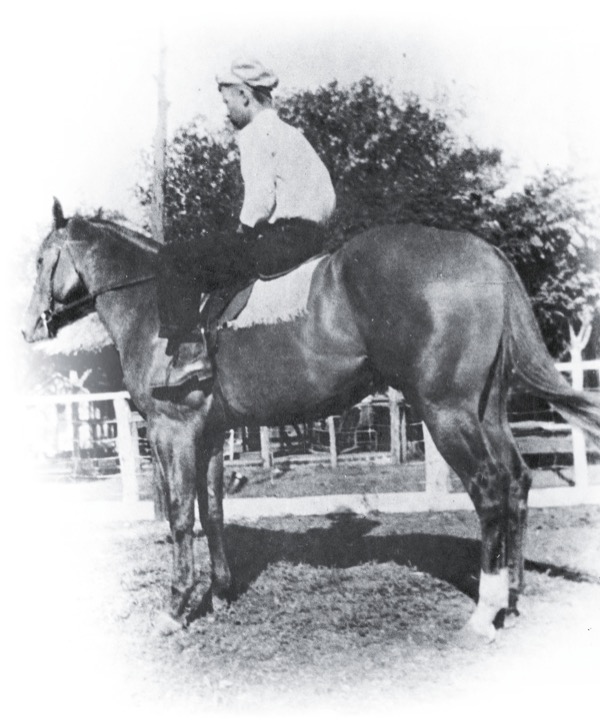
The horse manager on the W.T. Waggoner Ranch in the early 1900s said Yellow Jacket was 15.2 hands tall, looked like he carried some Thoroughbred blood and had a good conformation and disposition.
Mr. Miller then related to us a story most unusual but most welcome to the ears of a pedigree researcher.
“Yellow Jacket was a most wonderful horse,” he said, “and several years ago, I realized only one man in the world probably knew the truth about the breeding of his dam. The man was Albert Leath, who at one time lived here in Hays County but moved away and had been gone for several years.”
Mr. Leath paid a visit to Mr. Miller, however, and told the story of the mare’s breeding. Mr. Miller wrote the details on the back of an envelope, which he stored in a shoebox full of pedigree records.
At my visit, Mr. Miller went to a closet and began searching through the shelves. In only a matter of minutes, he produced the box. He opened it anxiously and took from it paper after paper, examining each one slowly and carefully. Near the bottom, he found that envelope.

Thus, with profound gratitude to Mr. Miller, we are able to tell something, if not all, about the breeding of Yellow Jacket’s dam.
Mr. Leath had purchased a Spanish mare from an itinerant trader. She had come from some point south of San Antonio, possibly Mexico. She was a mare of splendid conformation and proven performance capacity, a dun with a black stripe across her shoulders and down her back. There were stripes around her muscles and her legs.
Mr. Leath bred this mare to the late W.W. Lock’s Rondo, and to the cover of that preeminent foundation sire of the modern Quarter Horse, she foaled a yellow filly. Albert Leath sold this filly to his brother, Boone Leath, and then in the course of years, Boone Leath sold this daughter to Jim Barbee of Kyle.
Mr. Barbee then took this mare, equally as fine an individual and a performer as her mother, to the court of the Bunton Horse, also known as Little Rondo, Bunton’s Rondo and Rondo II, and a son of Lock’s Rondo. When mated with him, she foaled Yellow Jacket. Thus the mating of a son of Lock’s Rondo with a daughter of Lock’s Rondo produced the mighty Yellow Jacket.
It also developed in the course of our visit that not only did Mr. Miller well know this granddam and dam of Yellow Jacket, but that Mrs. Miller had frequently ridden Yellow Jacket’s dam when the mare was owned by Boone Leath, before she was sold to Mr. Barbee.
“I made many a trip on that mare to get the mail,” Mrs. Miller recalled.