BEING PARTICULAR
Noticing all the small details in your horsemanship can make a big difference.
By Tom Moates
One of the greatest lessons I have learned about working with horses – and one that I find to be of tremendous benefit to pass on to others as I teach horsemanship – is to be very particular in how we make requests of horses, and in the results that we expect from those requests.
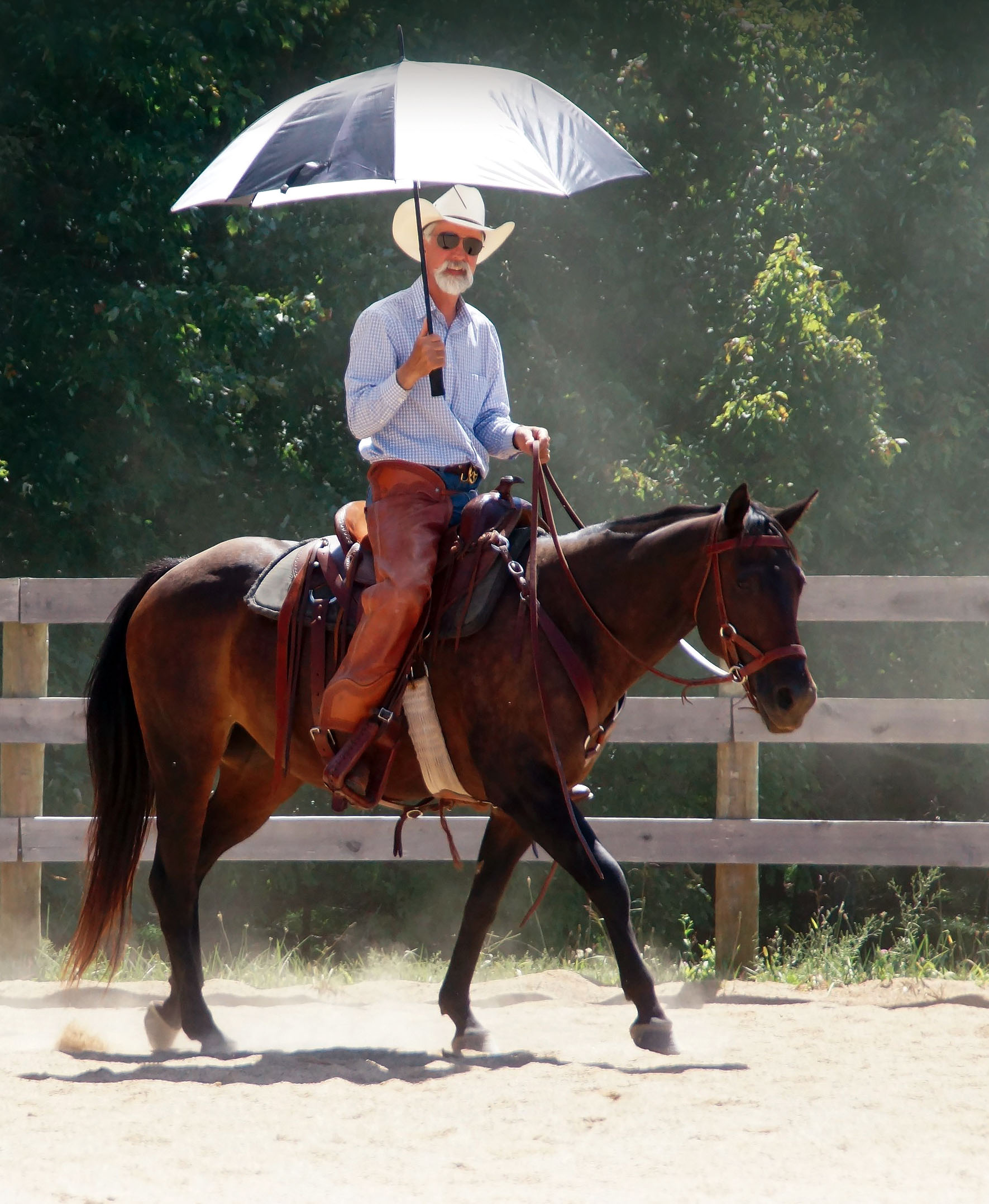
harry whitney
Being particular helps get a horse “with you” mentally and that, in turn, allows for a partnership that can include tasks that might not otherwise be possible – like packing a potentially scary object like a parasol.
Particular-ness gets glossed over all too easily by us humans, because we often overlook seemingly insignificant things that our horses don’t miss or consider insignificant. Thus, we inadvertently teach horses things we wish we hadn’t.
One example is allowing a horse’s attention to drift off when we do something as simple as put on a halter or lead a horse from one place to another. If we allow horses to “disappear” mentally in the small details of our relationships, then we are teaching them that it is fine to ignore us. When this gets to be a habit, we shouldn’t be surprised when they ignore us in other potentially more disconcerting areas, as well.

It was horsemanship clinician Harry Whitney who first made me aware that I was missing a great deal by not being nearly particular enough in my horse work. The root of the matter was that I was not noticing many moments when my horse left me mentally. In other words, I was not being particular enough at keeping my horse “with me” in all that we did together. Suffice to say, I had no clue that I was being sloppy in my work, especially as hard as I was working to be on target with my feel, timing of releases and other such things that go into establishing good communication with horses.
In many of my books, I share one of my favorite quotes from Harry: “Until you see it, you can’t see it. Then when you do see it, you wonder how you never saw that before!”
It is a quote that certainly applies to being particular with horses. We can overlook opportunities to improve our horse work by not paying close-enough attention and noticing where we let a horse begin to run off the rails in seemingly insignificant ways. But when the situation escalates and we get a foot stepped on, can’t get a horse in a trailer or get bucked off, we see those more obvious challenges and can be quite motivated to work on them.
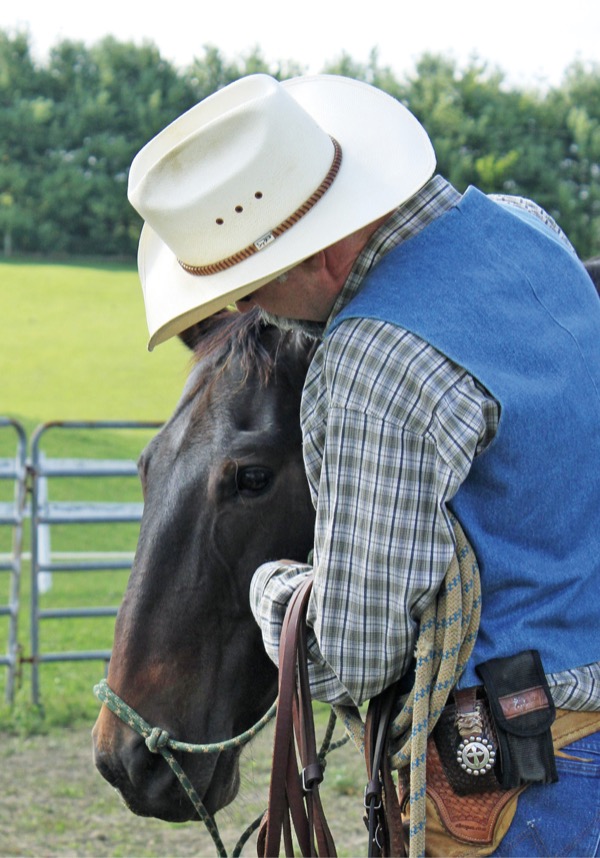
carol moates
Even something as simple as putting on the halter can set the tone for your session. Here with “Festus” (Cody Is A Barfly), I take my time and notice when his attention drifts away from me.
If we become more particular, as a rule, it goes a long way toward keeping our horses mentally “with us” more of the time. This can shape up our work with horses to a much more refined state, even if we weren’t having big troubles before. And if we manage to not miss those little moments where our horses’ minds start to leave us and can keep them focused with us, then we may even find that some bigger problems simply evaporate.
So, enough theory. What does being more particular with a horse look like in the real world?
I often see a person begin ground work by asking a horse to walk in a circle around his handler. But the horse crowds the person and perhaps even throws a shoulder in toward the person during the circling. If I am teaching and see this, I often will have the person stop and set the horse up to begin the circling again. Then I point out the little details that happen before the horse runs amuck, to help the handler become more aware about how to correct the problem.
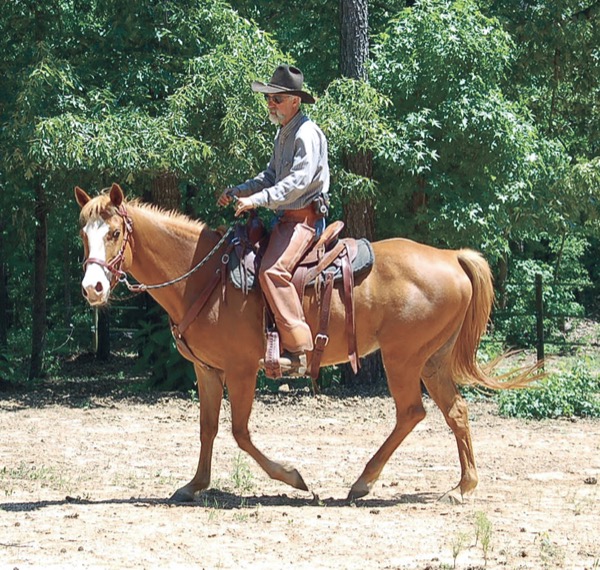
melissa moates
Riding “Mekenna,” owned by my brother and his wife, I make certain that when I engage a rein, the horse thinks and looks in that direction, rather than just moving her feet without really thinking “with me.”
Things usually begin with the person and the horse standing and facing each other. The person walks around to the side of the horse so that places the horse where he should be, relative to the person, when on the circle.
Wait! Hold it right there. Already we have trouble.
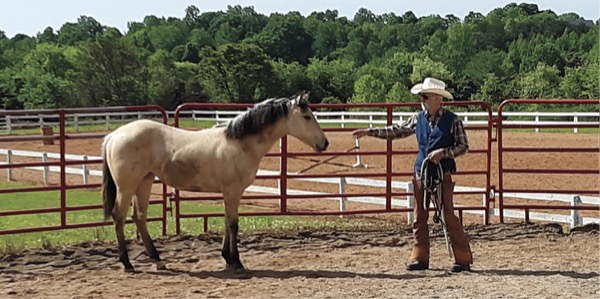
amie kennedy
I’m working with an AQHA Ranching Heritage-bred yearling named Prides Honor. I have spent a fair amount of time in the round pen with her at liberty, and I am asking her to draw to, or come toward, me. I have to notice each instance when her mind leaves me and the round pen and keep her finding releases when she looks me up. We are just about to make first contact in this photo, after she has tried a lot of other options.
Why do humans accommodate the horse in this way? Why do we feel the need to put ourselves into the correct position for the horse to circle around us? Why not ask the horse to pivot on his hind feet and step his front end laterally away from us to get himself into the correct position?
If the person walks around the horse to begin the circling, the horse can be standing there in a coma, so to speak, and it works out just peachy for him. The horse need not mentally or physically participate.
I coach the person to begin again (horse and human standing facing each other), but to stand still this time and ask the horse to get into position on the circle, rather than the other way around.
Tom Moates
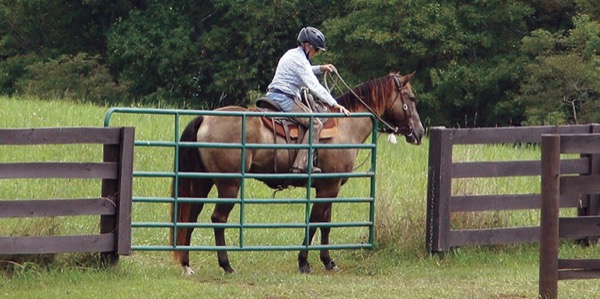
Catherine Millard rides “HC” at a clinic I hosted with Harry Whitney in Floyd, Virginia. Doing a job like opening a gate is a fantastic way to both work on being particular with your horse and see why it is important to be particular with your horse.
Most often, the person remains standing still in front of the horse but then takes the lead rope in the hand of the desired direction for the horse to begin circling and reaches out 90 degrees to the side, takes the slack out of the rope and begins to walk backwards. This pulls the horse forward and inevitably leads the horse right down the lead rope into the undesirable position of crowding the person, which is what we are working to fix in the first place.

Now it’s time to see in our example how getting particular makes a huge difference in horsemanship. Horses can follow a “feel” that a person presents on a lead rope, even a slack lead rope, but only if they are mentally available to us.
How do we keep a horse from crowding us when going onto a circle? By not allowing it. How do we not allow it? By being so particular from the very beginning of our requests that the right things work out. The horse gets supported through the process, finds releases in the correct moments and, voila, happy horse and happy person.
But this seems to be the really hard bit for many people. First, the horse’s mind must be centered on the person. If that is not the case and the horse’s mind is AWOL, then the person needs to do something to get the horse awake and checking in. I often slap my chaps with the end of the lead rope to make a noise, kick some sand or use a horsemanship flag. Without the horse’s mind focused on the handler, there can be no success, because the horse will not be attentive to the request nor respond thoughtfully to it.
olivia wilkes
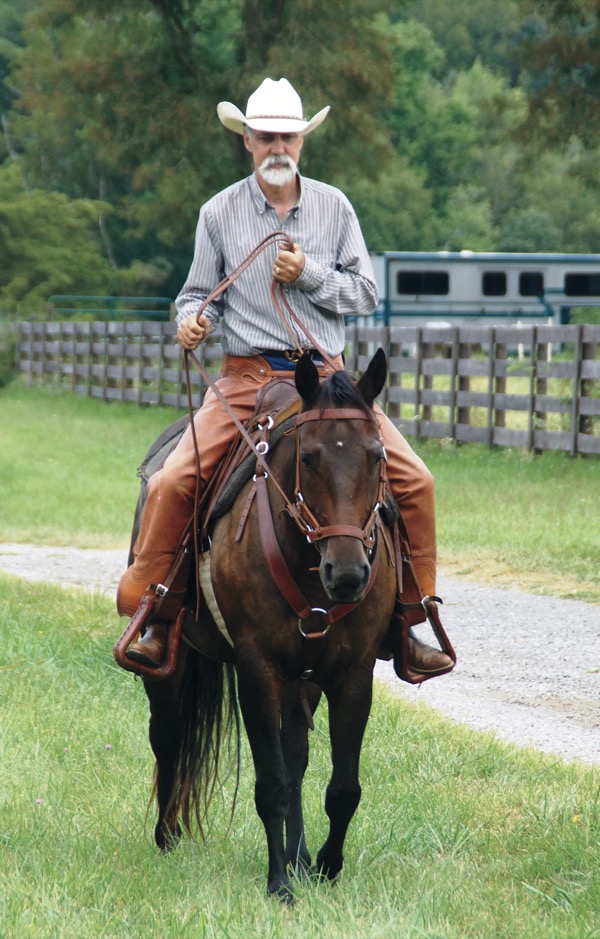
When I felt a slight crookedness to the right in my mare, “Mirage,” I mention it to her by asking for the opposite bend. Here, I am asking her to tip her head to the left, let go of the right bend and be willing to think about a leg yield to the right.
olivia wilkes
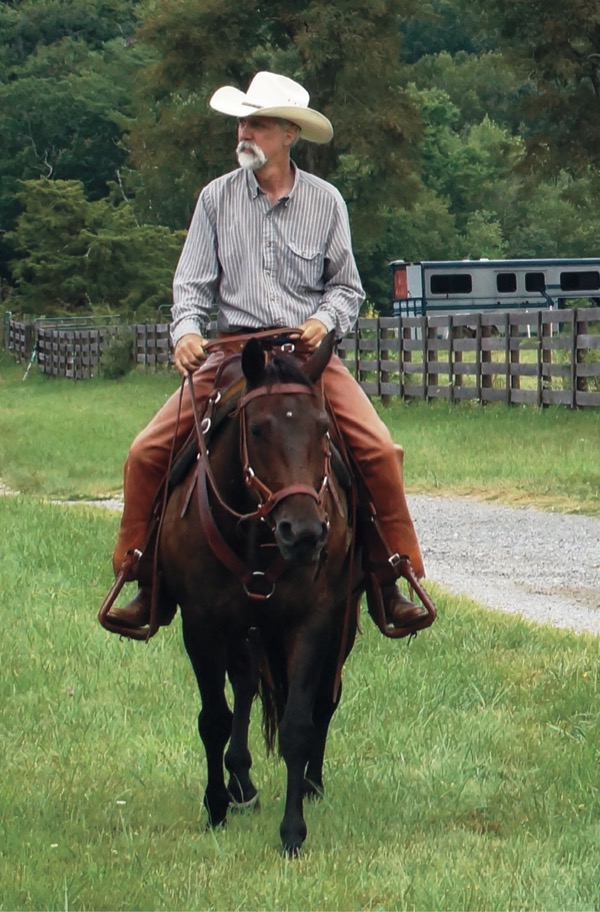
Now, she has let go of her crookedness to the right and has relaxed, bending to the left. Although she is now counter-bent in the opposite direction, she has let go of her strong thought that caused the right bend and has followed the feel I presented to carry the left bend for a few steps before we line out and go straight.
This is an “aha!” moment for some people, and one where Harry’s quote above applies. Until it is pointed out, many folks have no idea that their horses are ignoring them. I often see horses looking off in the distance, sniffing the dirt or with a glazed-over expression, rather than being focused on the person on the other end of the lead rope. Some experienced horses may even offer some of the motions that are being requested, but with an auto-pilot response lacking any thoughtful participation on the horses’ part.
When a person starts to see that a horse is completely out to lunch and how much better things go when they get a horse’s attention and then make a request, it seems so obvious that they wonder how in the world they missed it.
Once the horse is focused, the second step is to offer a feel for the horse to follow. In our scenario here, this amounts to the person asking the horse to step the front end laterally away. This cannot happen if the horse comes forward, but rather, the horse must be balanced or perhaps even rock back onto the hindquarters to pivot on the hind and step the front over to one side.
It is not possible for a person to take the slack out of the lead rope and, at the same time, ask a horse to step his front end over away from the person. If the person is in front of and facing the horse, the horse’s front end must step laterally away from the person to get the horse perpendicular to his handler. Once in that position, if the horse walks forward, he is on the circle.
There must be slack in the lead rope for the horse to have room to step his front end away from the person. Therefore, the person must leave plenty of slack in the rope and offer only a feel for the horse to follow to step the front end “over there” away from the person to one side.
This may seem like an awful lot to get a horse to simply go around a person in a circle.
Yes, it is. And that’s the point. The more particular we are with even the most basic things we ask of our horses, the more attentive and refined our horses become, which, in turn, enhances their performance and their relationship with us.
It can take some time and effort on the person’s part to break down every little thing we want to accomplish with our horses into minute parts and get each one polished up. But once that time is spent (And what might it be in the big picture, really? An hour, a day, maybe a week for some things?), the sum total can be a horse who then spends an entire lifetime with the wonderful habits of being attentive and willingly following a person. Such a horse is a joy to work with and well worth the effort.
Tom Moates is an author and horsemanship clinician from Floyd, Virginia. Learn more at www.tommoates.com.
A note of caution on being particular.
As I was learning about being particular, horseman Harry Whitney pointed out to me that there is a big difference between being particular and picking at your horse in a micromanaging kind of way. If a person nit-picks a horse to death, the horse is likely going to become increasingly frustrated, and his attention will leave.
This can be avoided by getting clear changes in what one asks of a horse. If a horse is looking “way over yonder” when it is time to circle the handler, for example, do something like slapping the end of the lead rope on the ground – but do not do it to the horse. Do not threaten, punish or drive the horse, but rather make the ruckus in the environment around you. This should help him let go of his other thought and draw his attention to see what is happening there with you.
When the horse checks in, make that a nice, quiet sweet spot between you two. Then offer what you have in mind to do with the horse and get going with it.
By contrast, do not try a bunch of little things to make a horse pay attention, without really getting a solid focus.
A person must “get big enough” to really get a horse’s thought focused with him and then let that work out, rather than just picking and picking and picking at the horse, asking for focus but without really getting a meaningful change.